Learn which best fiber sources for colitis may feel gentler, how soluble and insoluble fiber differ, and why pace matters for a sensitive gut every day.
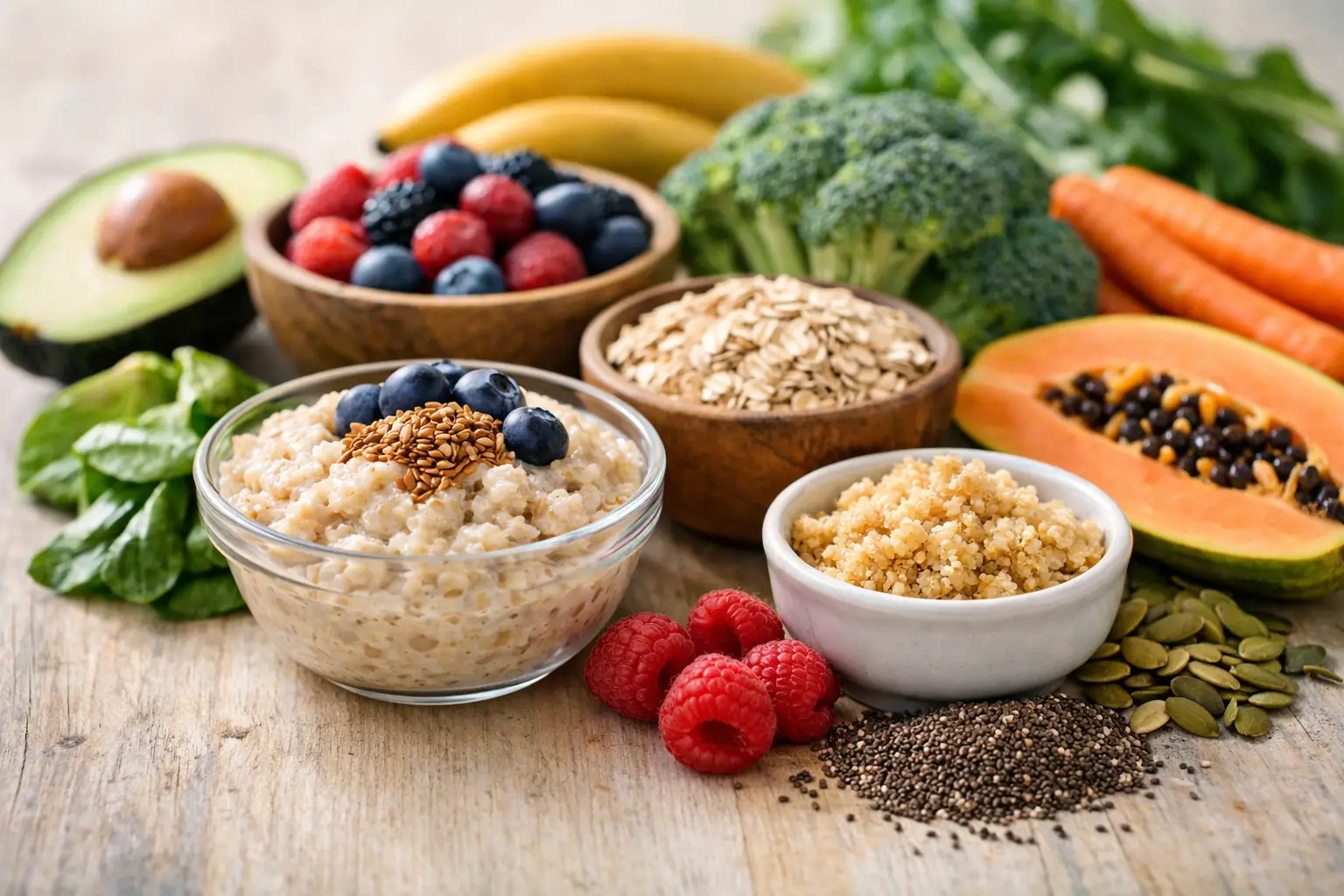
When your gut is already reactive, being told to “just eat more fiber” can feel dismissive. The best fiber sources for colitis are not one universal list because tolerance can change with bowel activity, stool patterns, food sensitivities, stress load, and the state of the gut lining. For many people, the form of the fiber and the pace of adding it matter just as much as the food itself.
Fiber remains valuable for digestion and supports overall health, but a large bowl of raw vegetables or a sudden scoop of fiber powder is not automatically the right starting point. A more useful naturopathic perspective asks: What type of fiber is this? Is it cooked, blended, peeled, or whole? And what is your body communicating after you eat it?
Fiber is the portion of plant foods that moves through the digestive tract without being fully broken down. It can influence stool texture, microbial activity, fullness, and regularity. Yet people with colitis often find that one high-fiber food feels grounding while another brings urgency, cramping, bloating, or loose stool.
Two broad categories help explain why. Soluble fiber absorbs water and forms a gel-like texture. It is often gentler for people who are working toward more formed stools. Insoluble fiber adds bulk and speeds movement through the bowel. It can be useful in some situations, but its rougher texture can be difficult when the gut feels irritated.
Neither category is inherently good or bad. The goal is to balance them thoughtfully, rather than forcing a generic target that does not match your current tolerance.
Soluble-fiber foods are often a practical place to begin, particularly when they are cooked until soft and introduced in modest portions. They are not a replacement for individualized care, but they offer a calmer starting point than many coarse, raw options.
Plain oatmeal is a familiar, flexible soluble-fiber choice. Choose a simple preparation rather than a heavily sweetened packet, and cook it thoroughly. If a full bowl feels like too much, begin with a smaller serving and pair it with a tolerated protein or fat, such as eggs or unsweetened nut butter if nuts work well for you.
Oat bran can be more concentrated than rolled oats, so it deserves a slower introduction. Some people do well stirring a small amount into oatmeal, while others find regular oats easier at first.
Psyllium is a soluble fiber that is often used to support stool consistency in either direction. Its texture is not appealing to everyone, but it can be one of the more adaptable tools when used carefully. Start low, mix it with enough fluid, and give your system several days before increasing the amount.
More is not better with psyllium. A large dose introduced too quickly may create pressure, gas, or discomfort. If you have a history of bowel narrowing, episodes of obstruction, or difficulty swallowing, fiber powders warrant a conversation with a qualified clinician who understands your full history.
Soft-cooked vegetables offer fiber alongside nutrients without the sharp texture of raw salads. Carrots, butternut squash, acorn squash, and peeled sweet potatoes are common options. Roasting, steaming, or making a simple puree can change the experience substantially.
Potato and sweet potato skins are nutritious but can be harder to tolerate than the soft interior. During a sensitive period, peeling them may be the more comfortable choice. You can reassess skins later rather than deciding they are permanently off limits.
A ripe banana can be a simple source of soluble fiber that travels well and requires little preparation. Applesauce, especially unsweetened applesauce, may also be easier than a raw apple with its peel. These are modest sources, not nutritional magic, but their soft texture can make them useful on days when more fibrous meals feel overwhelming.
If fruit causes bloating, the issue may not be fiber alone. Fruit sugars, portion size, and individual digestive patterns can all play a role. This is why food reactions deserve context rather than a blanket rule that fruit is good or bad.
Chia and ground flax provide fiber and fats that may assist a varied whole-food diet. Their texture, however, is not right for everyone with colitis. Soaked chia is generally gentler than dry chia, while finely ground flax is often easier than whole seeds.
Begin with a teaspoon rather than several tablespoons. If you notice more cramping, urgency, or visible seed particles in stool, step back. Traditional uses of these foods do not override your own tolerance.
Whole wheat bran, raw kale, large salads, broccoli stems, popcorn, vegetable skins, nuts, and larger servings of beans tend to contribute more insoluble fiber. These foods can be nourishing parts of a broad diet, especially when bowel function is settled. But they can also feel abrasive or create substantial gas for a sensitive digestive tract.
Preparation makes a difference. A cup of raw broccoli and a small portion of well-cooked broccoli florets are not equivalent from a digestive comfort standpoint. The same applies to beans: a smooth lentil soup may be more manageable than a large bowl of firm chickpeas.
There is no prize for tolerating the roughest form of a food. Natural wellness is not about following rigid food rules. It is about choosing forms and portions that promote well-being while still making room for nutritional variety.
If you are having frequent loose stools, urgency, visible blood, substantial abdominal pain, or a sharp shift in your usual pattern, temporarily emphasizing softer, lower-residue meals may feel more manageable. Think well-cooked vegetables, peeled starches, smooth soups, oatmeal, and protein choices you already tolerate.
This does not mean fiber must stay low forever. It means the digestive system may need less mechanical work in that moment. Once symptoms are calmer, reintroducing fiber gradually can provide clearer feedback than jumping from a highly restricted pattern straight into raw vegetables, bran cereal, and legumes.
New severe pain, fever, dehydration, fainting, persistent bleeding, or an inability to keep fluids down deserves prompt attention from an appropriate health professional.
A food journal does not need to become another stressful project. For one or two weeks, note the fiber food, portion, preparation, and what happened over the next day. Record stool frequency and consistency, bloating, urgency, pain, sleep, and stress. These details can reveal patterns that a single “high fiber” label misses.
Change only one meaningful variable at a time. For example, add a quarter cup of cooked squash with dinner for several days before introducing chia at breakfast. If you change five foods at once, it becomes difficult to know what helped or what did not.
Hydration belongs in the equation. Soluble fiber needs fluid to form its gel-like consistency, and inadequate fluid can leave some people feeling more bloated or constipated. Spread fluids across the day rather than trying to compensate all at once.
It also helps to look beyond fiber. Ongoing bowel symptoms can intersect with food intolerances, microbiome shifts, stress physiology, sleep disruption, thyroid patterns, hormonal changes, and prior antibiotic exposure. When you have been told your labs are normal - but you are not - a holistic approach can create space to examine the larger pattern instead of reducing every digestive concern to a fiber number.
The right fiber strategy for someone with constipation-dominant symptoms may look very different from the approach for someone with urgency and frequent loose stools. The same person may need different foods in different seasons of life. Perimenopause, autoimmune patterns, chronic stress, travel, and changes in routine can all affect digestive resilience.
For informational purposes, this educational content is meant to help you ask better questions about your own food patterns. The most useful plan is usually not the most restrictive one. It is the one that is realistic, nourishing, and adjusted with enough patience to let your gut communicate clearly.
A gentler bowl of oatmeal, a serving of soft squash, or a carefully measured amount of psyllium may seem less dramatic than a sweeping diet overhaul. For a sensitive gut, that steady and observant approach is often where meaningful progress begins.