Understand sibo vs ibs symptom differences, from bloating patterns to bowel changes, and why the distinction matters for a root-cause approach.
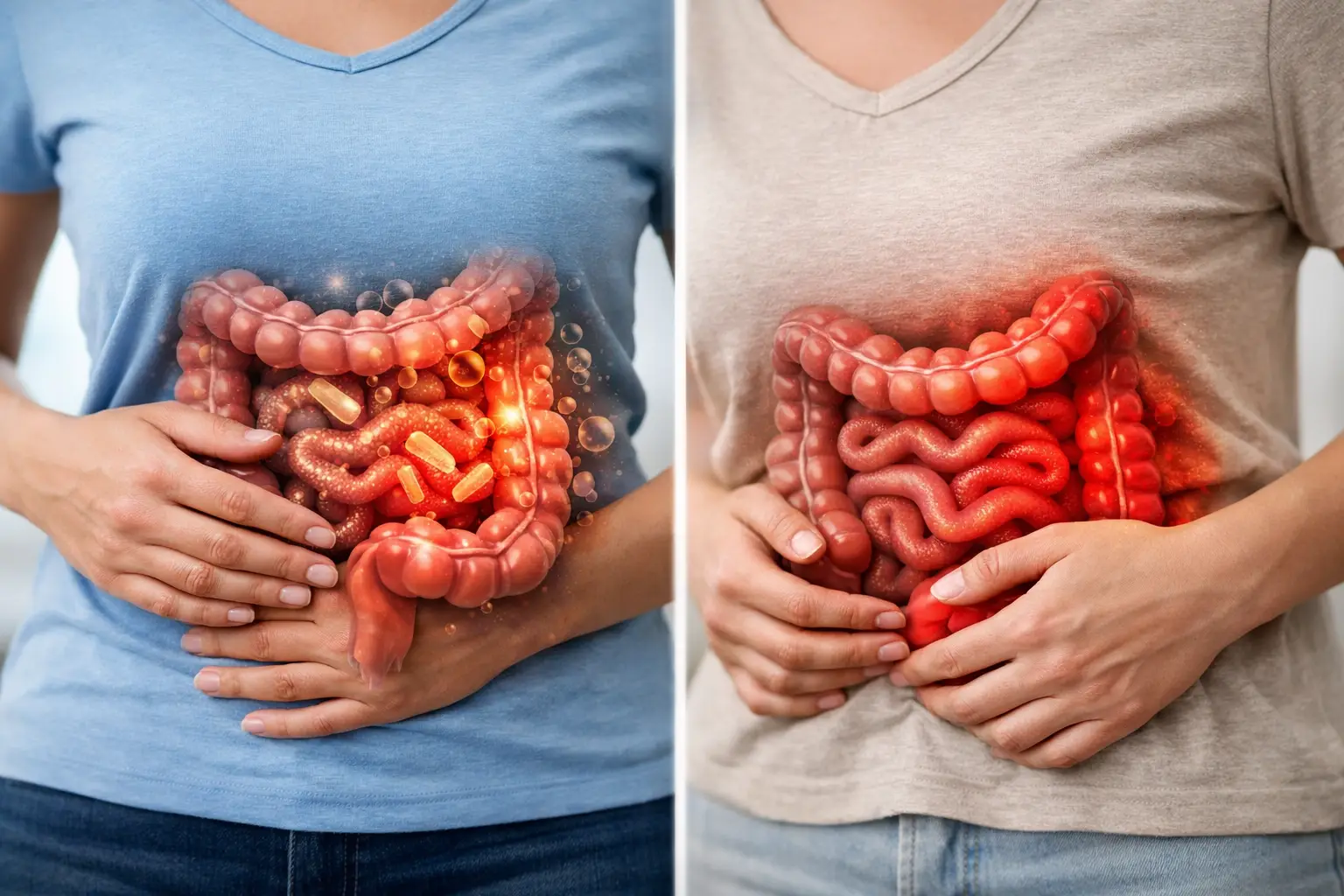
If you have been told your labs are normal - but you are still dealing with bloating, abdominal discomfort, constipation, diarrhea, or food reactions that seem to make no sense - the question of sibo vs ibs symptom differences is not academic. It matters because these two labels often overlap in real life, yet they do not always point to the same underlying pattern.
That is where many people get stuck. They are told they have IBS, advised to manage stress and avoid trigger foods, but the symptoms keep cycling. From a naturopathic perspective, IBS can be a descriptive label for a cluster of digestive symptoms, while SIBO points more specifically to bacterial overgrowth in the small intestine. Understanding that distinction may assist in making sense of symptoms that have felt scattered, inconsistent, or dismissed.
SIBO and IBS share a surprising amount of symptom overlap. Both can involve bloating, abdominal pain, irregular bowel habits, excessive gas, and a feeling that digestion is simply not working the way it should. That overlap is one reason many patients spend years moving between providers without a clear explanation that feels complete.
IBS, or irritable bowel syndrome, is generally used when someone has chronic digestive symptoms without obvious structural disease. It is often grouped into patterns like constipation-predominant, diarrhea-predominant, or mixed. SIBO, or small intestinal bacterial overgrowth, refers to an imbalance in where bacteria are concentrated and how they interact with digestion in the small intestine.
The practical challenge is that someone can carry an IBS label and also have SIBO. In some cases, what looks like IBS may actually be driven in part by bacterial overgrowth, altered motility, post-infectious changes, stress physiology, thyroid imbalance, or broader gut-immune disruption. That is why symptom labels alone do not always tell the whole story.
When people ask about sibo vs ibs symptom differences, they are usually trying to answer a more personal question: why do my symptoms happen the way they do?
One of the clearest patterns with SIBO is bloating that becomes pronounced shortly after eating. Many people describe looking relatively normal in the morning, then feeling distended by midday or after meals. The bloating can seem disproportionate to how much food was eaten. Even meals considered healthy may trigger it.
IBS can also cause bloating, but the pattern is sometimes more variable. In IBS, symptoms may be more tightly linked to stress, bowel movements, visceral sensitivity, and certain food triggers without the same strong sense of fermentation after eating. That said, there is no perfect dividing line. Some IBS patients bloat significantly, and some SIBO patients do not present in a textbook way.
Gas is another area where nuance matters. SIBO often involves excessive belching, trapped gas, or a sense of pressure building after meals. Patients may say food feels like it just sits there. In IBS, gas may still be present, but pain and bowel urgency can sometimes stand out more than the feeling of post-meal expansion.
Bowel patterns can offer clues, though not certainty. SIBO can be associated with constipation, diarrhea, or a mixed pattern depending in part on the types of gases being produced and the broader digestive environment. IBS is also classified by bowel pattern, so this alone does not separate the two. What may be more suggestive of SIBO is when constipation or diarrhea occurs alongside dramatic bloating, early fullness, and food intolerance that seems to be getting progressively broader.
Timing is often more revealing than the symptom itself.
With SIBO, symptoms often intensify within 30 minutes to a few hours after eating, especially after carbohydrate-rich foods, fiber, certain starches, or fermentable foods. Patients frequently report that they can almost predict the swelling, discomfort, or pressure that follows meals.
With IBS, symptoms may flare from meals too, but they are often more strongly tied to the gastrocolic reflex, stress load, lack of sleep, menstrual cycle shifts, or changes in routine. Some people with IBS feel worse before a bowel movement and better afterward. Others notice that stressful weeks produce more cramping and urgency than any single food does.
This is one reason rushed visits can miss the bigger picture. A symptom checklist may show overlap, but a detailed timeline often reveals patterns that deserve a closer look.
Another useful way to think about SIBO vs IBS symptom differences is to look beyond the bowel itself.
People dealing with SIBO sometimes report fatigue after meals, brain fog, nausea, nutrient-related concerns, or feeling unwell after supplements and foods that should support overall health. Some feel as though their digestive system has become increasingly reactive over time. While these symptoms are not exclusive to SIBO, the combination of gut symptoms plus systemic discomfort can point toward a more layered imbalance.
IBS can absolutely affect quality of life and mental well-being, and the gut-brain connection is real. But IBS is often discussed primarily in terms of bowel habits, pain, urgency, and symptom flares linked to stress and sensitivity. If the picture includes a striking level of food reactivity, upper abdominal fullness, or a sense that digestion is stalling, that may raise the index of suspicion for something more specific than IBS alone.
For patients who have already seen multiple specialists, this is usually the key issue. They do not just want a label. They want a coherent explanation.
A root-cause, holistic approach asks why symptoms are happening in the first place. Are motility patterns sluggish? Is stress physiology affecting digestion? Is there a history of food poisoning, thyroid imbalance, chronic infection burden, hormonal shifts, reflux medication use, or prior gut disruption? Is the nervous system constantly in a fight-or-flight state that changes how the gut moves and responds?
These questions matter because SIBO and IBS may overlap, but they do not always call for the same clinical thinking. When the underlying pattern is missed, people often cycle through restrictive diets, temporary symptom suppression, and frustration. That can leave them eating less and less while feeling no closer to answers.
From a naturopathic perspective, the goal is not to chase symptoms in isolation. It is to understand the terrain: digestion, motility, microbial balance, immune stress, endocrine influences, and the patient’s full history. That broader lens often promotes well-being more effectively than repeatedly changing foods without a plan.
A closer evaluation may be worthwhile if you have been told you have IBS but also notice severe bloating after meals, a firm or visibly distended abdomen as the day goes on, worsening reactions to high-fiber or fermentable foods, constipation that alternates with loose stools, or digestive symptoms that began after an infection, major stress period, or hormonal shift.
It is also reasonable to look deeper if standard IBS advice has not made sense for your body. Many patients know when the simple explanation is too simple. They are not imagining the pattern. They are noticing that their symptoms have a structure that has not yet been fully explored.
For people in Long Island, New York City, Garden City, Riverhead, Huntington, and surrounding areas - or those seeking nationwide telehealth support - this kind of detailed digestive case review can be especially valuable when conventional conversations have felt rushed or incomplete.
The most accurate answer is not that SIBO and IBS are completely separate, nor that they are exactly the same. It depends on the person.
Some people truly fit a classic IBS pattern with strong gut-brain involvement and symptom sensitivity. Others have signs that bacterial overgrowth, motility dysfunction, thyroid issues, chronic inflammation, or broader systemic imbalance may be contributing. Many have elements of both. That is why careful listening matters so much.
Educational content like this cannot replace individualized guidance, but it can help you ask better questions. If your symptoms seem to follow a clear post-meal pattern, if bloating is one of your most disruptive issues, or if your IBS label has never fully explained the whole picture, paying attention to those distinctions is worthwhile.
When you have been living with chronic digestive symptoms for a long time, feeling heard is not a small thing. Sometimes the next useful step is not doing more at random. It is finally looking at the pattern closely enough that it starts to make sense.